
Learning to See the City Differently
When I arrived at Franklin & Marshall College, I eventually earned a B.A. in History. But history wasn't my first academic love.
During my freshman year, I took a class taught by the late Professor David Schuyler (1950-2020), a leading authority on landscapes, cities, and public spaces whose published scholarship explored how Americans shaped their communities through parks, architecture, and urban planning. He was particularly known for his work on Frederick Law Olmsted, Central Park, and the evolution of the American city. The class focused on city planning, and from the very first lecture I was captivated. While many people think of cities as a collection of roads, buildings, and businesses, I discovered that great city planners thought about something much deeper: how people experience a place.
Schuyler's work often examined visionaries such as Frederick Law Olmsted and Calvert Vaux, the designers of New York City's Central Park, as well as the influence of Andrew Jackson Downing on America's landscape traditions. These thinkers believed that parks and green spaces were essential elements of urban life, not luxuries. Their goal was not simply to create a park. They wanted to create an experience.
In Central Park, for example, Olmsted and Vaux designed winding paths, carefully placed trees, meadows, and scenic vistas that often concealed the surrounding city. The intention was to give visitors moments of relief from urban life, places where they could walk, reflect, breathe, and briefly forget the noise and bustle beyond the park's boundaries. What fascinated me was the deliberate nature of it all. The placement of a tree. The curve of a pathway. The view from a particular bench. Every element was designed to encourage observation, contemplation, and connection with one's surroundings. Nothing was accidental - they saw the pause as necessary!
When was the last time you truly noticed your surroundings? Take a walk through your neighborhood. Notice the green spaces you usually rush past. Look at the cracks in the sidewalk and imagine how many people have walked that route before you. Observe the trees and wonder how long they've stood in that spot. Study the architecture of the buildings around you. Read the plaque on a park dedication. Learn who donated the land or why a memorial was installed.
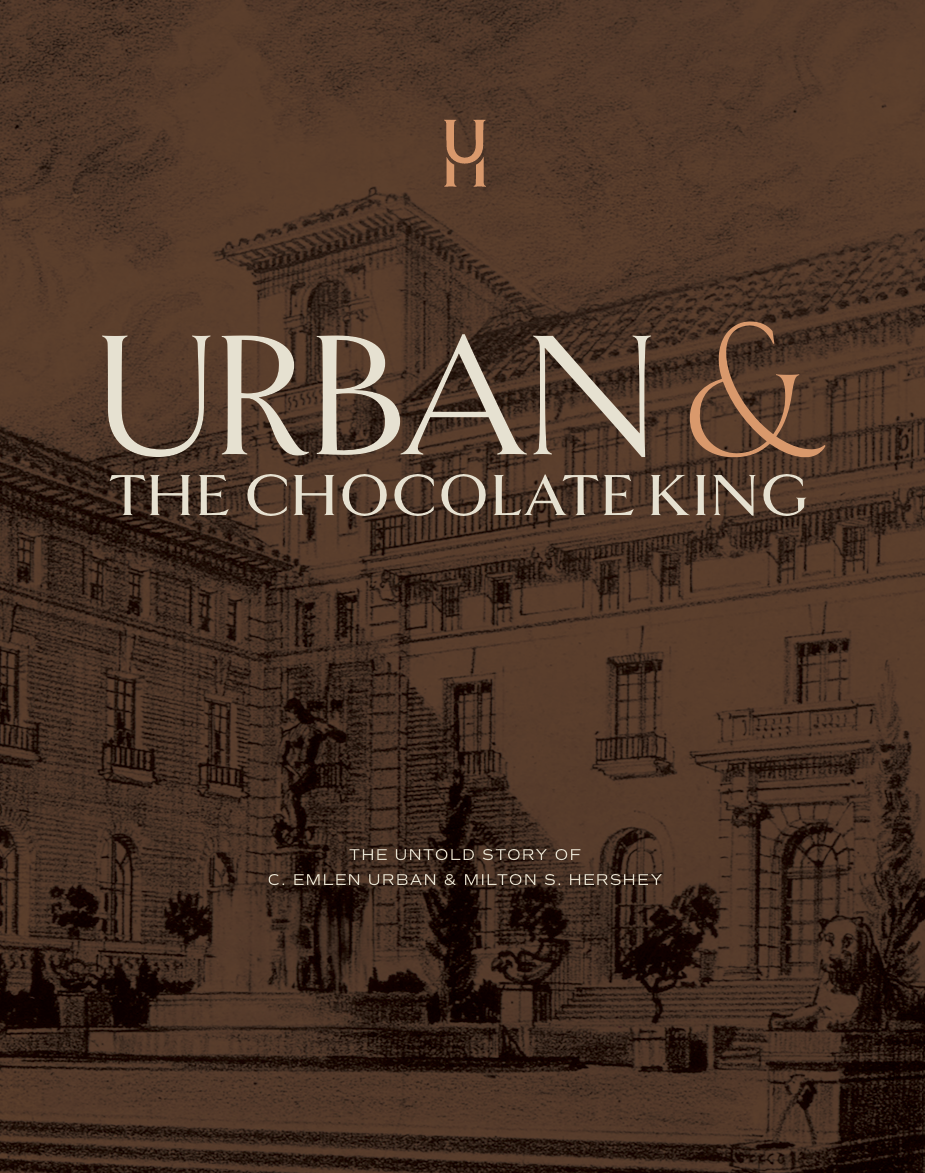
Looking back, it's easy to see how that college-fascination with city planning led me here. That's why I'm excited about Urban and the Chocolate King, a Your Perfect Pause experience exploring the lasting impact of C. Emlen Urban and Milton Hershey on our region. Featuring Gregg Scott, author of Urban and the Chocolate King and a leading authority on Lancaster architecture, this event offers an opportunity to see familiar structures through new eyes. Just as Professor Schuyler taught me to look more carefully at how cities and green spaces are designed, Gregg Scott invites us to discover the stories hidden in the places we pass every day. Clearly, we are part of a larger story, written not only in history books, but in the landscapes, parks, streets, and structures that surround us. Tickets are limited, and I'd love for you to be part of the conversation as we explore the fascinating connections between history, architecture, community, and place.
Because you deserve more than just a break.
Meet the Author: An Intimate Conversation with Gregg Scott
Celebrating the Launch of Urban and the Chocolate King
Hosted by Your Perfect Pause
Founded by Lyza Valenzo
Saturday, October 24
Southern Market, Lancaster
10:00 AM - 12:00 PM Program
Book Purchase and Signing Available
Just two days after the publication of his highly anticipated new book, Urban and the Chocolate King, author, preservationist, and storyteller Gregg Scott will join readers for an exclusive morning of conversation, discovery, and inspiration at Southern Market.
Hosted by Your Perfect Pause, a community dedicated to helping people slow down, connect, learn, and rediscover what brings meaning and joy to their lives, this special event offers a unique opportunity to hear directly from the author in an intimate setting.
Unlike a traditional book signing, this gathering is designed as a conversation. Through a moderated discussion led by Lyza Valenzo, founder of Your Perfect Pause, Gregg will share the remarkable story behind the book, the research that brought it to life, and the deeply personal connection that inspired him to write it.
At the heart of Urban and the Chocolate King is legendary Lancaster architect C. Emlen Urban, whose vision helped shape the architectural character of Lancaster and beyond. As Gregg immersed himself in Urban's life and legacy, he began discovering extraordinary parallels between the architect's journey and his own. The similarities became so striking that Gregg often says he feels as though he was "chosen" to tell Urban's story.
Guests will also receive updates on Gregg's restoration of the historic Roslyn Carriage House, an Emlen Urban-designed property at the corner of President and Marietta Avenues. This preservation project has become another meaningful chapter in Gregg's connection to the celebrated architect.
Event Agenda
9:30 AM
Coffee/tea/pastries, gathering, and conversation
10:00 AM
Moderated discussion with Gregg Scott and Lyza Valenzo
11:15 AM
Audience Q&A
12:00 PM
Book sales, signing, personalization, and mingling
Why Attend?
This gathering is a closer look at the author, the story behind the book, and the fascinating connections that inspired it. Way beyond a typical book signing.
Attendees will have the opportunity to:
Hear firsthand how Urban and the Chocolate King came to be.
Learn about the uncanny parallels between Gregg Scott's life and C. Emlen Urban's.
Participate in an audience Q&A.
Purchase a signed copy of the newly released book.
Have books personally inscribed and customized by the author.
Receive updates on the Roslyn Carriage House restoration.
Connect with fellow history, architecture, and preservation enthusiasts.
As Gregg likes to say, "I don't retire, I rewire." That spirit of reinvention, purpose, and discovery runs throughout both his life and the pages of Urban and the Chocolate King.
Whether you're fascinated by Lancaster history, architecture, preservation, or simply love hearing the story behind a book from the person who wrote it, this will be a memorable morning of conversation and connection.
Signed copies of Urban and the Chocolate King will be available for purchase and personalization at the event.
About Your Perfect Pause
Founded by Lyza Valenzo, Your Perfect Pause creates opportunities for meaningful conversations, lifelong learning, and community connection. Through thoughtfully curated experiences, Your Perfect Pause encourages people to step away from the demands of daily life and engage with ideas, stories, and people that inspire them.